
They're both green algae superfoods, and they're often confused — but they're genuinely different. Spirulina leads on complete protein and the antioxidant phycocyanin; chlorella leads on chlorophyll. Here's the honest side-by-side, and how fresh-frozen spirulina fits in.
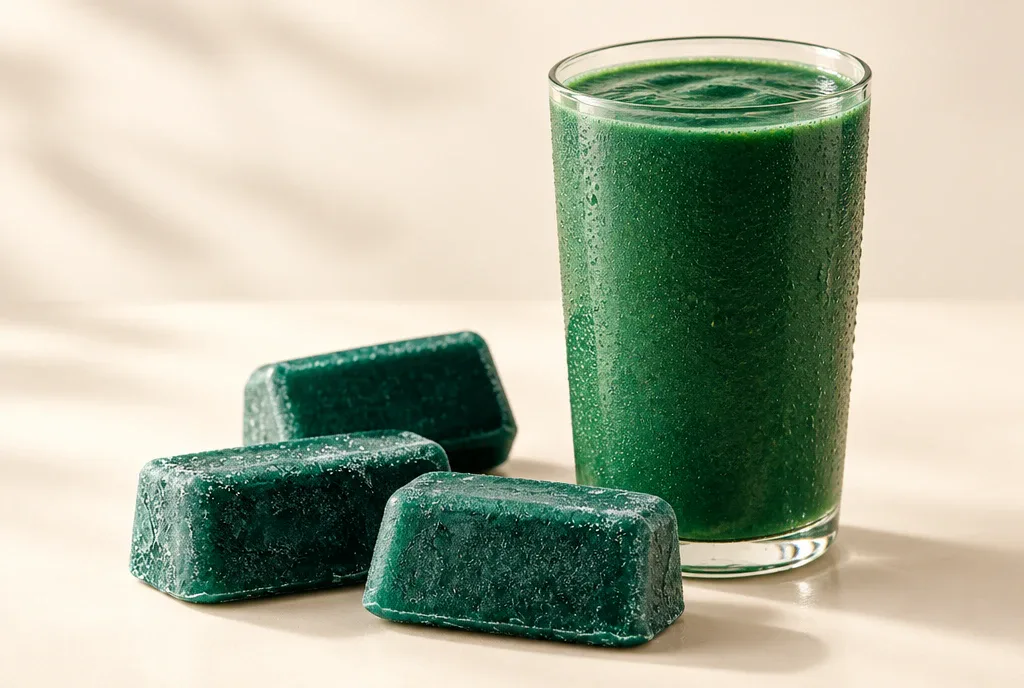
Spirulina is a blue-green algae (technically a cyanobacterium) prized for complete protein and its vivid blue antioxidant, phycocyanin. Chlorella is a green single-celled freshwater algae prized for very high chlorophyll — but it has a tough cell wall that must be broken ("cracked") for your body to absorb its nutrients. Spirulina has no such wall, so it's generally easier to digest.
| Spirulina | Chlorella | |
|---|---|---|
| What it is | Blue-green algae (cyanobacteria) | Green single-celled freshwater algae |
| Signature nutrient | Phycocyanin (blue antioxidant) + complete protein | Very high chlorophyll + "Chlorella Growth Factor" |
| Protein | ~60–70% by dry weight, complete (all 9 EAAs) | High (~50–60%), also a complete protein |
| Iron | Notable plant source (10% DV per serving) | Contains iron; varies by product |
| Digestibility | No tough cell wall — easy to digest | Tough wall must be "cracked" first |
| Taste | Fresh-frozen = virtually flavor-free | Strong, grassy |
| Often chosen for | Protein, antioxidants, everyday green nutrition | Chlorophyll and green "cleanse" routines |
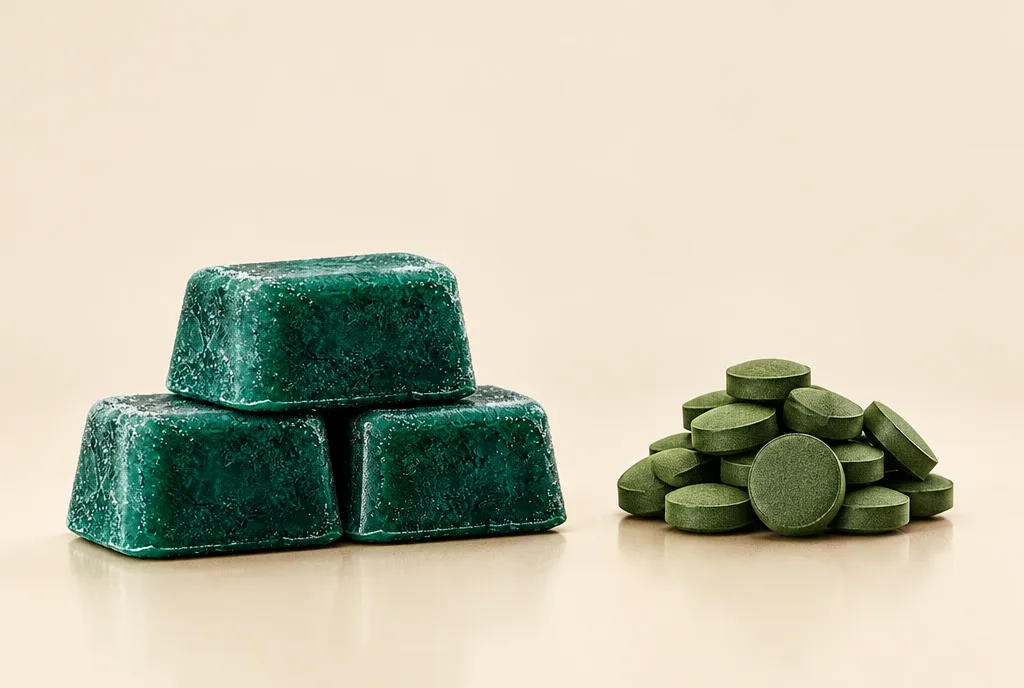
You want complete plant protein, iron and the antioxidant phycocyanin in an easy daily form. Fresh-frozen spirulina adds all of that to a smoothie without any fishy taste — a habit you'll actually keep.
You're specifically after its very high chlorophyll. Just note the taste is strong and the cell wall needs to be "broken" for absorption — look for "cracked cell wall" on the label.
Plenty of people use both — they're complementary. But if you want one green superfood that's protein-rich, antioxidant-rich and genuinely easy to use every day, fresh-frozen spirulina is hard to beat. See what spirulina actually does and why fresh beats powder.
A quick note. This is general nutrition information, not medical advice. Spirulina and chlorella are foods and are not intended to diagnose, treat, cure or prevent any disease. If you're pregnant, nursing, on medication or managing a health condition, talk to your doctor before adding a new food or supplement.
Spirulina is a blue-green algae known for complete protein and phycocyanin; chlorella is a green algae known for very high chlorophyll and a tough cell wall that must be cracked for absorption. Spirulina has no such wall, so it's generally easier to digest.
Neither is simply better — they're different. Spirulina for complete protein, iron and phycocyanin in an easy everyday form; chlorella mainly for its chlorophyll. Some people use both. SimpliiGood makes fresh-frozen spirulina, which is flavor-free and keeps its heat-sensitive compounds intact.
Yes — they're complementary whole foods and are often sold together, since each brings different nutrients. If you're pregnant, nursing, on medication or managing a condition, check with your doctor first.
Spirulina is the standout for protein — roughly 60–70% by dry weight, with all nine essential amino acids. Chlorella is protein-rich too, but usually a bit lower. For a complete-protein boost in a smoothie, spirulina is the stronger pick.
Both taste strong and grassy as dried powders. The difference is the format: fresh-frozen spirulina is flash-frozen instead of heat-dried, so it's virtually flavor-free and disappears into a smoothie.
More in the Spirulina Learning Center, or compare fresh vs. powder.